Rebreather Diving

Quiet, efficient and extended-range diving using closed-circuit rebreathers.

What Is Rebreather Diving?

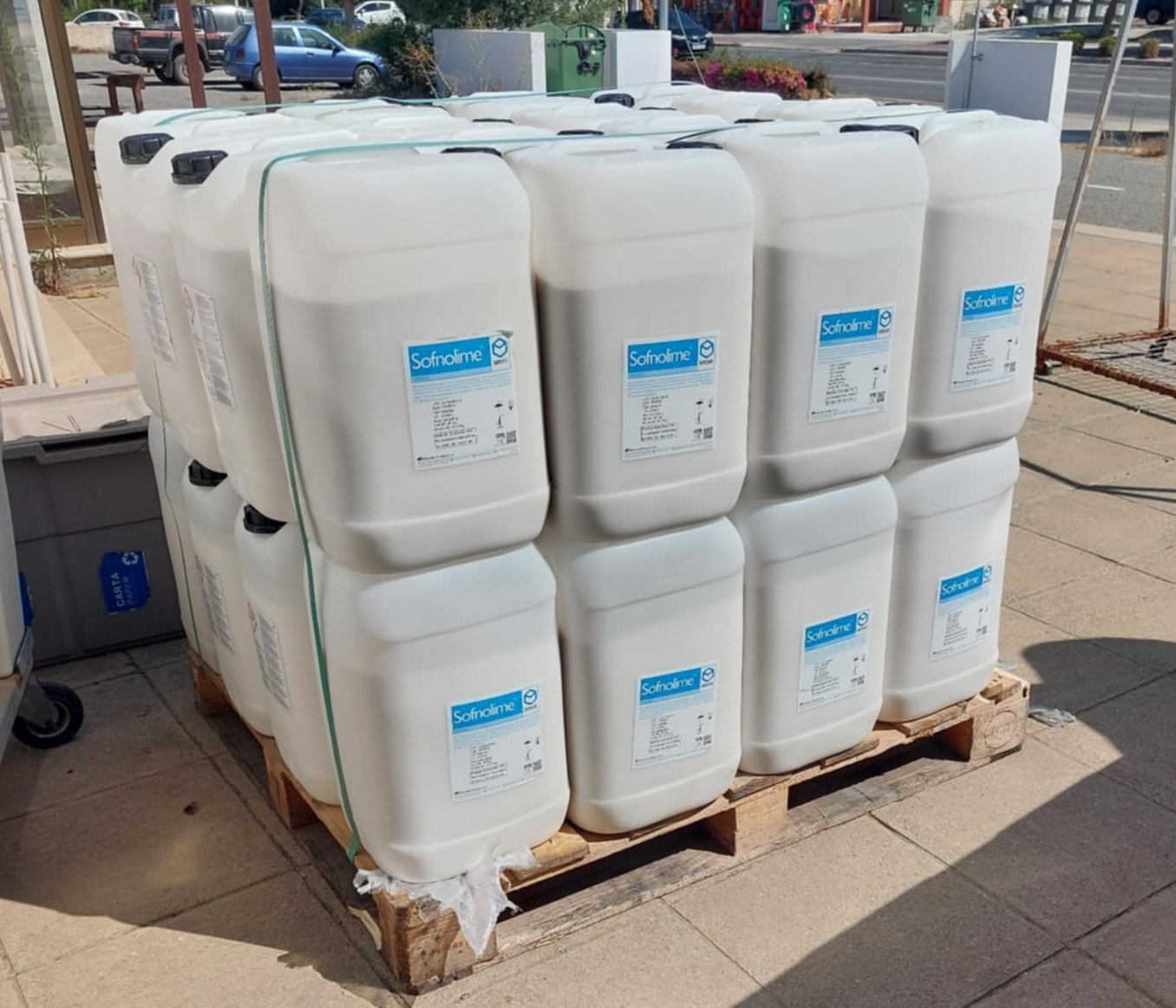
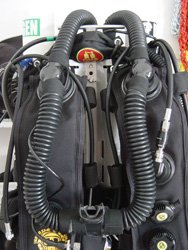
Closed-Circuit Rebreathers (CCR) recycle the diver’s breathing gas by removing carbon dioxide and replenishing oxygen, rather than venting exhaled gas into the water.

This allows divers to maintain an optimal breathing gas mixture at any depth, significantly increasing efficiency, dive duration and decompression control.

View CCR Courses
Gas blending

How Rebreathers Work

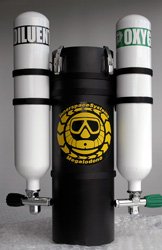
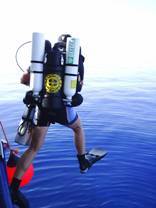
Rebreathers are the future of Scuba Diving, offering many benefits, especially on the deeper, longer dives. Here at Scuba Tech, we can offer training and Try Rebreather Diving experiences on the ISC Megalodon Rebreather Unit, The ISC Tiburon CCR or the Meg's Little Brother CCR, the ISC Pathfinder.

What are the benefits of using CCR on a dive? How do rebreathers work and what do they do?
Gas blending

With most Rebreather Units, and indeed the Megalodon CCR, you must have a means of injecting Oxygen into your breathing loop. Back to Physiology basics...

Oxygen is the only gas in the air that humans use in the process of respiration. We breathe air in, and we metabolise the Oxygen in the air, which our bodies use to "feed" every cell in our body. The human body cannot survive without oxygen and in partial presures of less than 0.18, we risk Hypoxia (lack of Oxygen). We then exhale the used air with a high concentration of Carbon Dioxide.

The end result is that the Oxygen in the Rebreather's breathing loop decreases as we use it up, so we need to add more periodically to maintain a breathable mix. This is done on the Megalodon by using Oxygen sensors, that measure the partial pressure of the Oxygen in the loop to maintain a certain set-point. When the Oxygen levels drop below a certain point, the Rebreather fires Oxygen into the mix.

Gas blending

Diving with a Rebreather is beneficial in a number of ways. As mentioned earlier, you can manually set your set-point to whatever you want on the dive (your Rebreather instructor will tell you more about this on your Training Course) but usually, it is set to around 1.2 PO2. The Rebreather will then give you the optimum mix of nitrox or trimix, depending on your diluent for whatever depth you are at. For example, with a set point of 1.2 PO2, a Rebreather Diver using air diluent, at 30m will be breathing a mix of 30% nitrox. If that same diver ascends to 15m, the Rebreather maintains the 1.2 PO2, adds more Oxygen to the breathing loop and delivers a mix of 48% nitrox. This gives you an added margin of safety from narcosis and decompression and allows accelerated decompression, if you make a decompression dive.

Other benefits of using a Rebreather over Open Circuit are

  • Extended bottom time
  • Optimised gas mixture at all depths
  • Greatly reduced gas consumption
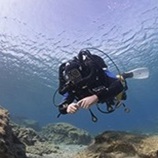
  • Minimal bubbles and disturbance
  • Improved decompression efficiency and...
  • It looks cool

Rebreather Try Dives

€160

Our rebreather try dives are the ideal introduction to CCR diving, allowing qualified divers to experience the benefits of rebreathers under close instructor supervision.

Try dives focus on familiarisation, basic operation and in-water comfort, rather than certification.

Spend some time at the dive centre exploring the rebreathers and learning how they work, so you will have a better in-water experience. Then head down to Green Bay to get comfortable using the CCR in shallow water and practice bailing out to Open Circuit, before making your first bubble-free, Open Water Dive, lasting a minimum of sixty minutes.

This is our most popular rebreather offering.

TDI Rebreather Courses

Advanced Nitrox
Air Diluent CCR Diver

From €1,000

This is the entry level course for Divers wanting to use CCR for Air Diving.

The Course introduces the Diver to the Megalodon, Pathfinder or Tiburon CCR units and the skills required to complete No decompression Dives on the rebreather including; unit preparation, configuration, basic maintenance and operation, together with dive planning, drills and Rebreather Techniques.

course is conducted over 6 days and includes a minimum of 7 dives / 520 minutes to a maximum depth of 30m.

Students should have their own CCR for the course but units can be rented, if needed, for €400 for the duration of the training course

Advan
Air Diluent Decompression Procedures Course

From €1,000

This is the second entry level course for Divers wanting to use CCR for Air Diving.

The Course introduces the Diver to the Megalodon CCR, the Tiburon unit and/or the Pathfinder CCR and the skills required to complete formal decompression Dives on the CCRs including; unit preparation, configuration, basic maintenance and operation, together with dive planning, drills and Rebreather Techniques.

The course is conducted over 6 days and includes a minimum of 7 dives / 520 minutes to a maximum depth of 45m.

Students should have their own CCR for the course but units can be rented, if needed, for €400 for the duration of the training course

Advanced Nitrox
Crossover Courses

From €600

For those divers who are already certified as Rebreather Divers but wish to cross the skills from the current unit over to using the Megalodon CCR, Pathfinder CCR or Tiburon.

This is a 3-4 day course where you will go over Rebreather Diving Basics and learn the skills and maintenance specific to the Megalodon CCR, Pathfinder or Tiburon Rebreathers.

Divers can be crossed over to a maximum level of Air Diluent Decompression Procedures CCR Diver, regardless of their current rebreather certification level.

Students should have their own CCR for the course but units can be rented, if needed, for €250 for the duration of the training course

Course durations and prices may vary depending on experience, equipment configuration and performance. Prices include gases and boat fees for the described courses.

Start your bubble-free adventure into CCR

Contact us to discuss course options, schedules, and prerequisites.

Contact the dive centre